Aluminum Doors and Windows Packaging Solutions Comparison: How Steel Frame Packaging Reduces Damage Rate in FCL vs LCL Shipping

When goods arrive at the port for inspection, cracked glass and extruded deformed frames of aluminum doors and windows are the last scenario manufacturers want to face for large orders. In 2025, a Foshan building materials company shipped a batch of 4-meter floor-to-ceiling aluminum doors and windows to a core European port, with a damage rate reaching 63% upon arrival, which not only delayed project progress but also caused high claims and a crisis of brand trust. The global comprehensive damage rate of fragile goods transportation is about 12.7%, among which losses caused by non-compliant packaging account for as high as 68%. The 2024 annual report of the International Federation of Insurance Associations shows that 78% of cargo insurance claims focus on physical damage during transportation. The World Bank logistics research further clarifies that optimizing packaging solutions can directly reduce the damage rate by 40%-60%. For high-value and easily damaged building materials such as aluminum doors and windows, choosing the right packaging logic for Full Container Load (FCL) and Less Than Container Load (LCL) with professional steel frame packaging is the core solution to control damage from the source and ensure order delivery.
Frankly speaking, many manufacturers fall into a misunderstanding: they think packaging for aluminum doors and windows is just wrapping foam and nailing wooden boxes, but they do not realize that the transportation logic of FCL and LCL is completely different. Mismatched packaging schemes cannot stop road loss no matter how thick the protection is. FCL transportation runs through one container from start to finish, goods are not mixed with other products, and the number of transit unpacking is very small. The core demand is to maximize the space utilization rate and cargo stability in the container, and avoid extrusion deformation of aluminum doors and windows frames and glass cracking caused by stacking. In this transportation scenario, customized steel frames with horizontal strap fixation can realize multi-layer horizontal stacking, which not only does not waste container space, but also offsets bumping and vibration during transportation through rigid structures. The only risk to avoid is the center of gravity offset caused by unbalanced stacking height in the container.
LCL transportation follows a completely different logic. Aluminum doors and windows are mixed with goods from multiple manufacturers in the same container, and most likely experience multiple unpacking, transshipment and reloading midway, with loading and unloading frequency 3-5 times that of FCL. Packaging must withstand the impact of repeated handling, extrusion of different goods, and also take into account moisture-proof and anti-displacement for long-distance transportation. Most senior practitioners will adopt a four-layer protection combination of carton + pallet + strap + moisture-proof film, building a solid protection barrier from the outside to the inside, and can maximize the protection of profiles and glass of aluminum doors and windows even in case of rough handling.
For oversized aluminum doors and windows, the industry has a clear splitting decision line: in international maritime practice, single goods exceeding 2.9 meters or weighing more than 680kg must be split for transportation. According to the data of core European ports in 2023, after split packaging of oversized aluminum doors and windows, the damage rate directly dropped from 63% to 7%. When splitting, pack frames, glass and connectors separately, with laser-engraved serial numbers, classified accessories packaging and 3D assembly drawings, which can also reduce the on-site assembly error rate by 89%, which is the most stable transportation solution for large-scale project orders.
Three-dimensional Comparison of Three Packaging Solutions: Steel Frame, Wooden Box and Ordinary Pallet
Aiming at the core needs of aluminum doors and windows maritime packaging, we sorted out a comprehensive comparison of three mainstream packaging from actual delivery scenarios, clearly showing the advantages and disadvantages:
| Comparison Dimension | Steel Frame Packaging | Wooden Box Packaging | Ordinary Pallet |
|---|---|---|---|
| Structural Strength | ★★★★★ | ★★★★☆ | ★★★☆☆ |
| Moisture & Corrosion Resistance | Galvanized/painted full protection, suitable for high humidity environment | ISPM 15 heat treatment + moisture-proof lining | Basic simple protection |
| One-time Cost | High | Medium | Low |
| Reusability | Returnable container steel frame, recyclable | Mainly disposable | Disposable consumables |
| Applicable Scenarios | Aluminum doors and windows FCL transportation, large-scale project bulk orders | Aluminum doors and windows LCL transportation, precision components | Standard small-size aluminum doors and windows bulk goods |
| Rework Repair Rate | Below 3% | 8%-12% | 15%-20% |
STATE CROWN has been deeply engaged in the production, packaging and transportation of aluminum doors and windows for many years. Verified in thousands of order practices, the value of steel frame packaging is far more than structural rigidity. A single heavy-duty steel pallet bears more than 2 tons, can stably load 10-15 sets of aluminum doors and windows, and combined with the horizontal stacking process in the container, can completely eliminate displacement and deformation caused by transportation vibration. The average maritime damage rate of aluminum doors and windows in the industry is 8%-12%, while after adopting customized steel frame packaging, the damage rate can be stably controlled below 3%, greatly reducing claim costs and customer complaints. For long-term cooperative bulk orders, STATE CROWN also plans a steel frame return transportation scheme, which can reduce the comprehensive packaging cost by 30% in the long run, and further improve the transportation cost-performance ratio of large orders.
Cost-performance Test of Four Buffer Protection Solutions
The protection effect of aluminum doors and windows steel frame packaging is inseparable from the precise matching of buffer materials. The cost and damage reduction effects of different buffer schemes are significantly different, and the specific measured data are as follows:
| Buffer Solution | Cost Increase | Damage Rate | Applicable Aluminum Doors and Windows Scenarios |
|---|---|---|---|
| Honeycomb Aluminum Panel | +18% | 2.3% | High-end system aluminum doors and windows, landmark project orders |
| Inflatable Airbags | +9% | 5.1% | Conventional broken bridge aluminum aluminum doors and windows bulk transportation |
| Recycled EPS Foam | +6% | 8.7% | Temporary turnover, short-distance transit goods |
| EPE Divider + Wooden Box | +12% | 3-5% | Aluminum doors and windows LCL mixed transportation |
Many people ignore the key to damage reduction in packaging details. These seemingly minor treatments can directly improve the transportation safety factor of aluminum doors and windows. Inserting 3mm silicone gaskets between the glass and the aluminum frame can increase the vibration absorption rate by 41%; the surface of aluminum profiles is mostly anodized or powder-coated, which is easily scratched by friction. During transportation, EPE buffer pads must be used to isolate the profiles to eliminate surface loss; for high-humidity destinations, laying moisture-proof lining or painting moisture-proof gypsum layer on the inner wall of the package can avoid oxidation of aluminum doors and windows profiles and rust of hardware, which is also an important link to ensure product delivery quality.
Practical Frequently Asked Questions
Q1: Steel frame packaging has a high cost, can ordinary pallets plus cartons replace it?
Whether it can be used depends on the transportation method. When transporting aluminum doors and windows by FCL, ordinary pallets have insufficient structural strength. Once the goods shift, the pallets are easy to disintegrate, which will cause the whole box of aluminum doors and windows to be extruded and deformed. The subsequent rework and claim costs are far higher than the price difference of steel frame packaging. Although steel frame packaging is a one-time investment, it can be reused repeatedly with an extremely low damage rate, which is more cost-effective in the long run. Especially for aluminum profiles, excessive strapping force is easy to cause dents, and pallet solutions must add additional edge protection, which is more cumbersome.
Q2: How to minimize the damage risk when transporting aluminum doors and windows by LCL?
The core risk of LCL transportation is multiple loading and unloading. Grasping four key points can effectively reduce damage: first, adopt unitized packaging to eliminate bare package transportation of aluminum doors and windows; second, implement full palletization, use forklifts instead of manual handling to reduce falling risks; third, add multiple buffers with EPE or bubble wrap inside, and isolate each door and window in layers; fourth, install special moisture-proof lining for maritime transportation to avoid long-term moisture erosion. At the same time, wooden boxes must meet the ISPM 15 heat treatment standard to successfully complete customs clearance and delivery, which is a hard requirement that cannot be ignored in the industry.
Q3: For oversized aluminum doors and windows transportation, is there a better solution besides splitting?
For aluminum doors and windows over 2.9 meters, splitting is the safest industry consensus. After splitting, matching open-top containers and steel frame fixation is the best choice for oversized FCL transportation. STATE CROWN customizes exclusive steel frame fixing frames for oversized orders, combined with a split coding traceability system, which not only ensures transportation safety, but also enables efficient and error-free on-site assembly, fundamentally avoiding damage and customs clearance problems caused by oversize.
STATE CROWN Aluminum Doors and Windows Packaging and Transportation Practical Guidelines
- FCL orders give priority to aluminum doors and windows steel frame packaging, with horizontal stacking and honeycomb aluminum panel buffer, damage rate stably below 3%
- LCL orders adopt unitized multi-layer protection, wooden box + EPE divider + moisture-proof lining, suitable for multiple transit transportation scenarios
- Oversized aluminum doors and windows strictly implement the 2.9-meter splitting standard, with coding traceability and assembly drawings
- Install silicone gaskets between profiles and glass, fully cover EPE buffers for surface sprayed profiles, and strengthen moisture-proof treatment in high humidity areas
- Plan steel frame return transportation scheme for bulk long-term orders, reduce comprehensive packaging costs and improve order profit margins
The maritime packaging of aluminum doors and windows is never a simple protective wrap, but a quality guarantee throughout the whole process of order delivery. From packaging scheme selection, material matching to detail processing, each step directly affects the damage rate, delivery efficiency and customer reputation. STATE CROWN has always optimized the aluminum doors and windows packaging system with practical experience, using professional steel frame packaging solutions to solve transportation loss problems, and escort the safe delivery of every order.
Contact State Crown
Explore the State Crown products
CASEMENT WINDOW
CASEMENT WINDOWS WITH MESH GB-85
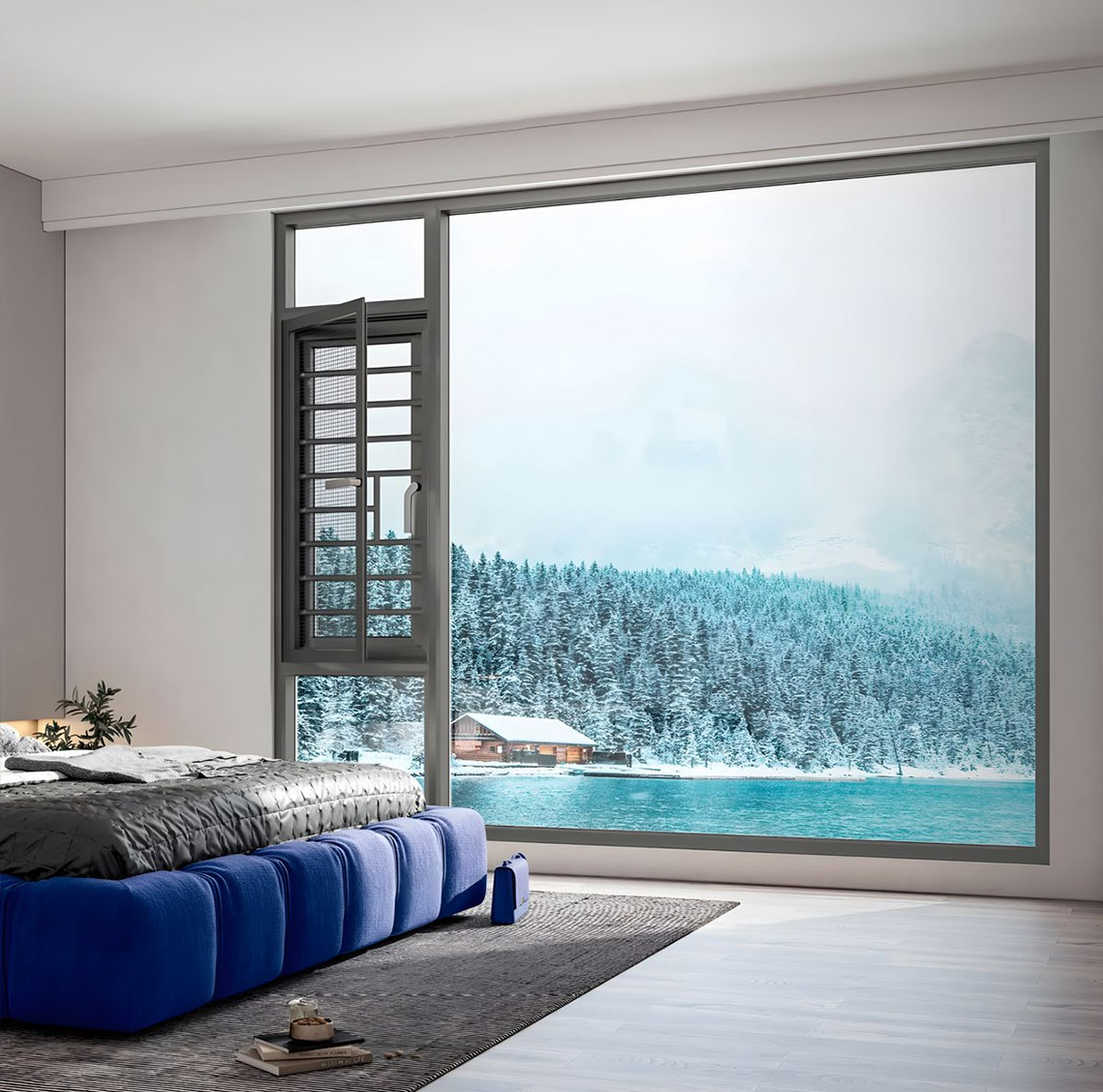
The GB-85 casement window system combines intelligent design with robust engineering to deliver exceptional operability and durability. Ideal for installations in hard-to-reach areas such as above...
CASEMENT DOOR
CASEMENT DOOR GB-70
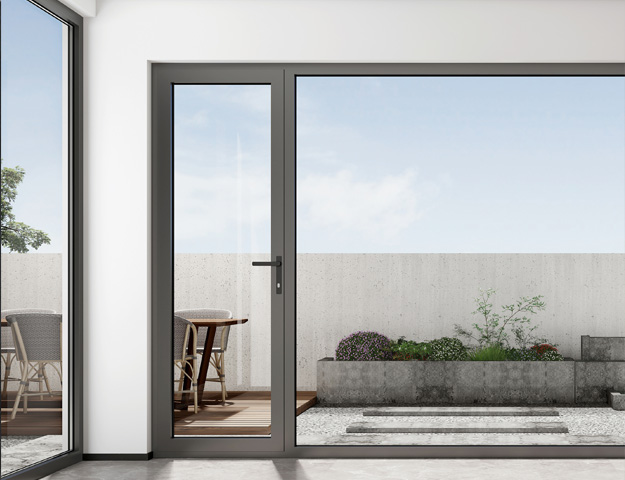
State Crown’s casement doors combine classic aesthetics with contemporary engineering. Featuring full-height aluminum stiles and rails with concealed multi-point locks, they provide secure a...
CASEMENT WINDOW
CASEMENT WINDOW WITH MESH GB-106

Ideal for enhanced ventilation and insect protection, the GB-106 casement window combines elegant design with high functionality. Its built-in mesh screen allows continuous fresh airflow while kee...
Contact State Crown
Custom Solutions for Global Projects
Established in 2005, we specialize in the customization of premium aluminum alloy doors and windows. With over ten years of industry experience, we are committed to the product philosophy of "Safety, Practicality, and Advanced Technology".
- ISO9001 Quality Management System
- EU CE certification
- IPMS (Intellectual Property Management System)
- Australian, American, and Canadian standards
We are located in Foshan, Guangdong, just under one hour's drive from Guangzhou Baiyun International Airport, in the heart of the Pearl River Delta Economic Zone.
If you are interested in any of our products, or would like to discuss a custom order, please feel free to contact us. We look forward to building long-term business relationships with clients around the world.