Fire-Rated Windows EI vs E Classification: Borosilicate vs Cesium-Potassium Glass Fire Performance Comparison
In the building fire separation system, fire window directly determines the spread path of fire and smoke and the safety of personnel evacuation during a fire. Many professional designers often confuse the E-class non-insulated and EI-class insulated ratings of fire window. Especially in the selection of borosilicate glass and monolithic cesium-potassium glass, parameter differences will directly affect project acceptance and long-term safety. Based on measured data, the latest 2026 fire compliance requirements and industry standards, we analyze the actual performance and failure logic of the two glasses in fire scenarios, helping you clarify the core selection logic of fire window insulated type and fire window non-insulated type, while balancing compliance and whole-life cycle cost-effectiveness.
Many people simply classify the three fire ratings E, EW, and EI into one category, but the three have essential differences in protection logic. E-class represents fire integrity. This kind of fire window non-insulated type products can only block the penetration of flames and smoke, but cannot suppress heat conduction. The temperature on the unexposed side will continue to rise with the fire temperature. Even if the glass is not broken, high-intensity thermal radiation will ignite surrounding combustibles or burn personnel. On the basis of integrity, EI-class adds thermal insulation performance. According to BS EN 1634-1 and the new GB 16809-2024 standard, the average temperature rise on the unexposed side must be controlled within 140℃, and the maximum single-point temperature rise does not exceed 180℃, fundamentally blocking the hazard of thermal radiation, which is also a mandatory requirement for high-rise refuge areas in 2026. EW class is between the two, with integrity and partial thermal insulation capacity, mostly used in non-core fire areas with basic restrictions on thermal radiation.
Glass material is the core that determines the performance of fire window. The differences in physical parameters between high borosilicate 4.0 glass and monolithic cesium-potassium glass directly determine fire resistance stability, failure risk and applicable scenarios. Combined with the key points of 2026 compliance testing, the relevant parameters of core failure temperature are supplemented, and the specific comparison is as follows:
| Performance Parameter | High Borosilicate 4.0 Glass | Monolithic Cesium-Potassium Glass | Core Failure Temperature (Softening Point) | Practical Engineering Impact | Remarks |
|---|---|---|---|---|---|
| Thermal Expansion Coefficient | 3.3×10⁻⁶/K | 9.0×10⁻⁶/K | – | Borosilicate fire-resistant glass has far better thermal shock resistance than cesium-potassium glass, which is not easy to break due to sudden temperature changes, meeting the water spray impact resistance requirements for refuge floors in the new GB 16809-2024 standard | – |
| Standard Fire Resistance Duration | 120-180 minutes | 60-90 minutes | – | Fire window insulated type products mostly use borosilicate glass to meet long-term fire resistance requirements, adapting to the compliance requirements of commercial complexes and high-rise office buildings in 2026 | – |
| Thermal Conductivity | 0.75W/(m·K) | 1.0W/(m·K) | – | Borosilicate glass has higher thermal insulation efficiency, adapting to the strict requirements of EI rating, and can effectively control the temperature rise on the unexposed side | – |
| Thermal Shattering Risk | Extremely low, can withstand thermal shock above 300℃ | Easy to shatter instantly when exposed to cold water after high-temperature softening | – | When the sprinkler is activated, the failure probability of cesium-potassium glass increases significantly, which does not meet the testing standards for fire windows in refuge floors | Refer to the water spray impact resistance requirements in the new GB 16809-2024 standard |
| Spontaneous Breakage Risk | Zero (no nickel sulfide impurities) | Certain risk of tempered spontaneous breakage | – | Borosilicate glass is more suitable for building scenarios with long-term no maintenance, which can reduce the whole-life cycle maintenance cost | – |
| Adaptable Fire Window Rating | Can meet all E and EI ratings | Only suitable for E-class non-insulated rating | – | Refuge areas must use borosilicate glass systems, which is a mandatory requirement for fire compliance in 2026 | Corresponding to XF 97-2025 “Non-load-bearing Fire-resistant Glass Partition Walls” standard |
| Strain Point | Approximately 525℃ | Approximately 450℃ | – | Borosilicate glass has stronger ability to maintain mechanical strength at high temperatures and is not prone to structural relaxation in advance | Determines structural stability in high-temperature environments |
| Softening Point | Approximately 820℃ | Approximately 600℃ | 820℃ (Borosilicate), 600℃ (Cesium-Potassium) | Borosilicate glass is not prone to sagging deformation, while cesium-potassium glass is prone to softening and sagging in the middle stage of fire, losing its fire protection effect | Core failure temperature, directly determining the survival rate in fire |
| Thermal Shock Resistance | > 300℃ | < 150℃ | – | Borosilicate glass can withstand extreme temperature difference impact and remains intact after sprinkler activation, while cesium-potassium glass is easy to shatter due to thermal shock | Determines the effectiveness of the product after the fire sprinkler system is activated |
It is not difficult to see from the table parameters that the core differences between the two types of glass focus on high-temperature stability and failure risk, which are also the core concerns of 2026 fire compliance inspections and B-end procurement decisions. After all, the failure of fire window often means fire hazards and compliance risks, especially in crowded scenarios such as high-rises and commercial complexes, where any slight parameter difference may lead to serious consequences.
After a fire breaks out, the performance of glass will show differences in stages, and this difference will eventually be reflected in the failure mode. In the initial 0-30 minutes of a fire, both types of glass can effectively block thick smoke and open flames. At this time, the core role of fire window is to prevent the rapid spread of fire and smoke, gaining time for personnel evacuation. Entering the middle stage of 30-60 minutes, monolithic cesium-potassium glass will have edge softening due to continuous high temperature (approaching its 450℃ strain point), the surface stress layer will gradually relax, the structural strength will drop sharply, obvious microcracks will appear on the glass surface, and the thermal insulation capacity will be almost completely lost; while borosilicate glass, relying on its low expansion characteristics and high strain point of 525℃, still maintains a complete structural form, continuously exerting thermal insulation and fire isolation effects, and the temperature on the unexposed side is always controlled within the compliance range.
Fire Window Thermal Shock Failure Mode Analysis
In B-end customers and industry testing, the most concerned is the “worst-case scenario” of fire window in fire, and thermal shock failure is the most common extreme scenario. The failure paths of the two glasses are significantly different, directly determining the safety bottom line and compliance of the project:
- Thermal shock failure path of monolithic cesium-potassium glass: High fire temperature (gradually approaching 600℃ softening point) → Relaxation and failure of the stress layer formed by chemical tempering on the surface → Sharp decline in glass structural strength, resulting in softening and sagging → Activation of fire sprinkler system, cold water sprayed onto the high-temperature glass surface (temperature difference exceeding 150℃ thermal shock limit) → Instant shattering of glass, complete loss of fire integrity, rapid penetration of fire and smoke, leading to secondary hazards. In actual projects, many non-compliant cesium-potassium glass fire windows have such failures after sprinkler activation, which cannot meet the 2026 new standard certification renewal requirements.
- Thermal stability logic of borosilicate glass: It inherently has an extremely low thermal expansion coefficient of 3.3×10⁻⁶/K → The tension generated by the internal and external temperature difference in fire is extremely small, and there is no need to rely on the surface stress layer to maintain the structure → The thermal shock resistance can reach more than 300℃, far exceeding the temperature difference impact after sprinkler activation → Even when approaching the 820℃ softening point, it will not shatter instantly, and remains intact after sprinkler activation, continuously exerting fire protection and thermal insulation effects, fully meeting the water spray impact resistance requirements for refuge floors in the new GB 16809-2024 standard.
Interestingly, the difference in this failure mode is essentially determined by the material characteristics of the two glasses – cesium-potassium glass relies on “surface strengthening” through chemical tempering, while borosilicate glass is “inherently stable”, which is also the core reason why more and more high-end projects in 2026 prefer borosilicate glass fire windows.
Many people only pay attention to glass performance, but ignore that fire window is a complete system. Frames and accessories also determine the final protection effect, and are also the focus of 2026 fire compliance inspections (the new GB 16809-2024 standard clearly requires that key components such as frames and seals must pass fire resistance testing separately):
- The frame adopts fire-resistant steel profiles or grouted aluminum profiles with a wall thickness ≥1.5mm (aluminum alloy exterior window base material ≥1.8mm, interior window ≥1.4mm), filled with Class A flame-retardant materials such as rock wool and intumescent fire-resistant mud to avoid glass falling due to high-temperature deformation of the frame
- The sealing strip is made of 200℃ high-temperature expansion material, which expands 3-5 times in volume when heated to block the gap between glass and frame, preventing fire and smoke from penetrating through the joints, meeting the new standard smoke tightness requirements
- Fire-resistant sealant is used between glass and frame, and a standard-compliant window closing device is matched to ensure that the automatic closing time of the active sash is ≤60s, and the action temperature of the temperature control element is 68℃, meeting the requirements of linkage signal feedback function
Different building scenarios have different rating requirements for fire window. Accurate selection can balance safety, compliance and cost. Combined with the 2026 ESG and Life Cycle Cost (LCC) concepts, the specific selection suggestions are as follows:
- Refuge walkways, fire walls, high-rise refuge rooms: Mandatory use of fire window insulated type, equipped with borosilicate composite glass, which must pass the water spray impact test to meet the requirements of the new GB 16809-2024 standard, which is a mandatory indicator for fire compliance in 2026
- Building exterior walls, light wells, equipment rooms: Fire window non-insulated type can be selected, and monolithic cesium-potassium or borosilicate glass can meet the requirements, but it is necessary to confirm that the product has completed the 2026 certification renewal to avoid compliance risks
- Atrium separation of commercial complexes, coastal buildings, chemical parks: Fire window with EI90 and above ratings is preferred, and borosilicate glass or corrosion-resistant aluminum alloy frame fire window is selected to balance weather resistance and long-term stability, reducing the whole-life cycle maintenance cost
2026 Fire Compliance and Life Cycle Cost (LCC) Perspective
In 2026, the global construction industry focuses on ESG and Life Cycle Cost (LCC). The selection of fire window no longer only depends on the initial procurement cost, but also pays more attention to long-term safety, compliance and operation and maintenance cost-effectiveness, which is also the core decision-making logic of B-end purchasers.
Although the initial procurement cost of monolithic cesium-potassium fire window is relatively low, it has the risks of spontaneous breakage and weak weather resistance – it is prone to corrosion and sealant aging in complex environments such as humidity and salt spray. In the operation of commercial complexes and high-rise office buildings for more than 10 years, its maintenance, repair and replacement costs (LCC) are often higher than those of borosilicate fire window. Especially with the 2026 fire certification renewal requirements (old standard certificates must be renewed before November 30, 2026), some cesium-potassium glass fire window products cannot pass the new standard testing due to performance limitations and need to be replaced in advance, further increasing the operation and maintenance costs.
For purchasers pursuing long-term asset safety and conforming to ESG concepts, the borosilicate fire window system is a better investment option – its characteristics of zero spontaneous breakage, high weather resistance and long fire resistance duration can greatly reduce the frequency of later maintenance and replacement. At the same time, there is no need to worry about the compliance certification renewal problem. From the perspective of the whole life cycle, the cost-effectiveness is much higher than that of monolithic cesium-potassium fire window. STATE CROWN has been deeply engaged in the field of door and window manufacturing, accurately adapting to the 2026 fire compliance requirements. All fire window products have passed authoritative tests such as GB 16809-2024 and BS EN 1634, completed the new standard certification renewal, and can provide complete test reports and technical solutions to help project compliance acceptance and reduce the whole-life cycle cost.
In the process of selection and compliance acceptance, many practitioners encounter similar questions. We have sorted out high-frequency questions for reference, which are in line with the 2026 compliance requirements and B-end needs:
Q1: Can fire window insulated type replace non-insulated type?
Yes, fire window with EI rating meets both integrity and thermal insulation requirements, fully covering the protection requirements of E rating, and meets the compliance requirements of most scenarios in 2026. Although the initial procurement cost is relatively higher, it is more cost-effective from the perspective of the whole life cycle.
Q2: Can monolithic cesium-potassium glass be upgraded to EI-class fire-resistant glass through processing?
It is impossible to achieve. The thermal insulation performance of monolithic glass has a natural bottleneck. EI-class fire-resistant glass needs to adopt composite processes such as lamination and grouting, matched with borosilicate original sheets to meet the thermal insulation and temperature rise control requirements in the new GB 16809-2024 standard, which is also a key inspection item in 2026 fire testing.
Q3: How to verify the compliance of fire window products and adapt to the 2026 certification renewal requirements?
It is necessary to check the BS EN 1634 or GB 16809-2024 new standard test report corresponding to the product, confirm that the fire resistance duration, glass specifications and frame material in the report are completely consistent with the actual installed products, and confirm that the product has completed the new standard certification renewal to avoid using unrenewed old standard products, leading to unqualified acceptance.
Q4: Does fire window need regular maintenance after installation? What are the main maintenance costs?
Yes, this is also an important part of the Life Cycle Cost (LCC). Focus on checking whether the frame seals are aging, the glass is damaged, and the window closing device is working normally; the maintenance costs mainly include seal replacement, glass repair, window closing device debugging, etc. Due to its strong stability, the maintenance frequency and cost of borosilicate glass fire window are much lower than those of cesium-potassium glass products.
Q5: What are the new requirements for fire window compliance certification in 2026?
The core requirements include: products must comply with the new GB 16809-2024 standard, and key components such as frames and seals must pass fire resistance testing separately; old standard certification certificates must be renewed before November 30, 2026, and certificates not renewed before February 28, 2027 will be revoked; fire window in refuge floors must pass the water spray impact test, and active sashes must have linkage signal feedback function.
Q6: How much can the life cycle cost of borosilicate fire window be saved compared with cesium-potassium glass?
The specific savings ratio varies by scenario. In the 10-year operation and maintenance cycle, in large projects such as commercial complexes, borosilicate glass fire window can save 30%-50% of maintenance and replacement costs, especially in complex environments such as coastal areas and chemical industry, the savings ratio is higher, and it can also avoid rectification costs caused by non-compliance.
Choosing a fire window is never a simple material comparison, but a comprehensive consideration of life safety, compliance risks and life cycle costs. Especially in the context of 2026 fire compliance upgrades and the popularization of ESG concepts, the scientificity of selection directly affects the safety and cost-effectiveness of the project. Focusing on different fire protection needs and compliance requirements, STATE CROWN has created a full range of fire window products. Whether it is fire window insulated type suitable for core fire areas or fire window non-insulated type suitable for conventional separation, all adopt high-standard glass and frame systems, pass authoritative fire testing and new standard certification renewal, and can provide customized technical solutions and complete certification documents to provide reliable guarantee for building fire safety and compliance acceptance, and help purchasers control the life cycle cost.
Contact State Crown
Explore the State Crown products
CASEMENT WINDOW
US CASEMENT HANDY WINDOW GB-90
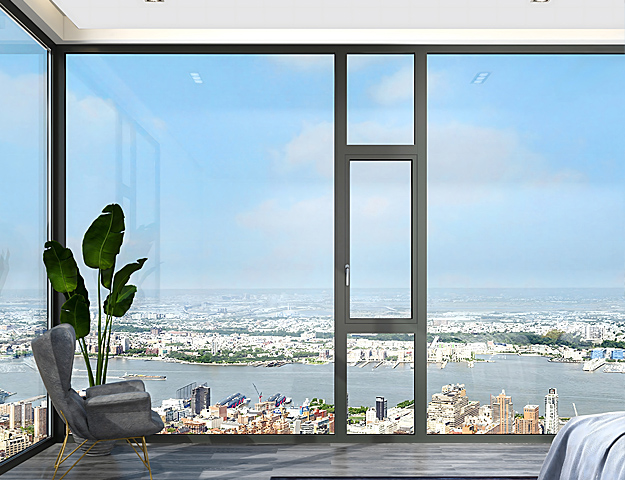
Specifically designed for the North American market, our US Casement Handy Windows combine rugged durability with user-friendly operation. Featuring heavy-duty extruded aluminum frames (meeting AA...
CASEMENT DOOR
CASEMENT DOOR GB-70
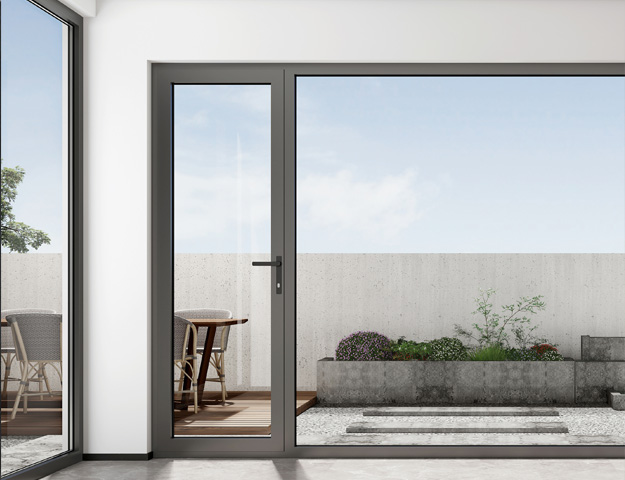
State Crown’s casement doors combine classic aesthetics with contemporary engineering. Featuring full-height aluminum stiles and rails with concealed multi-point locks, they provide secure a...
CASEMENT WINDOW
CASEMENT WINDOW GB-50
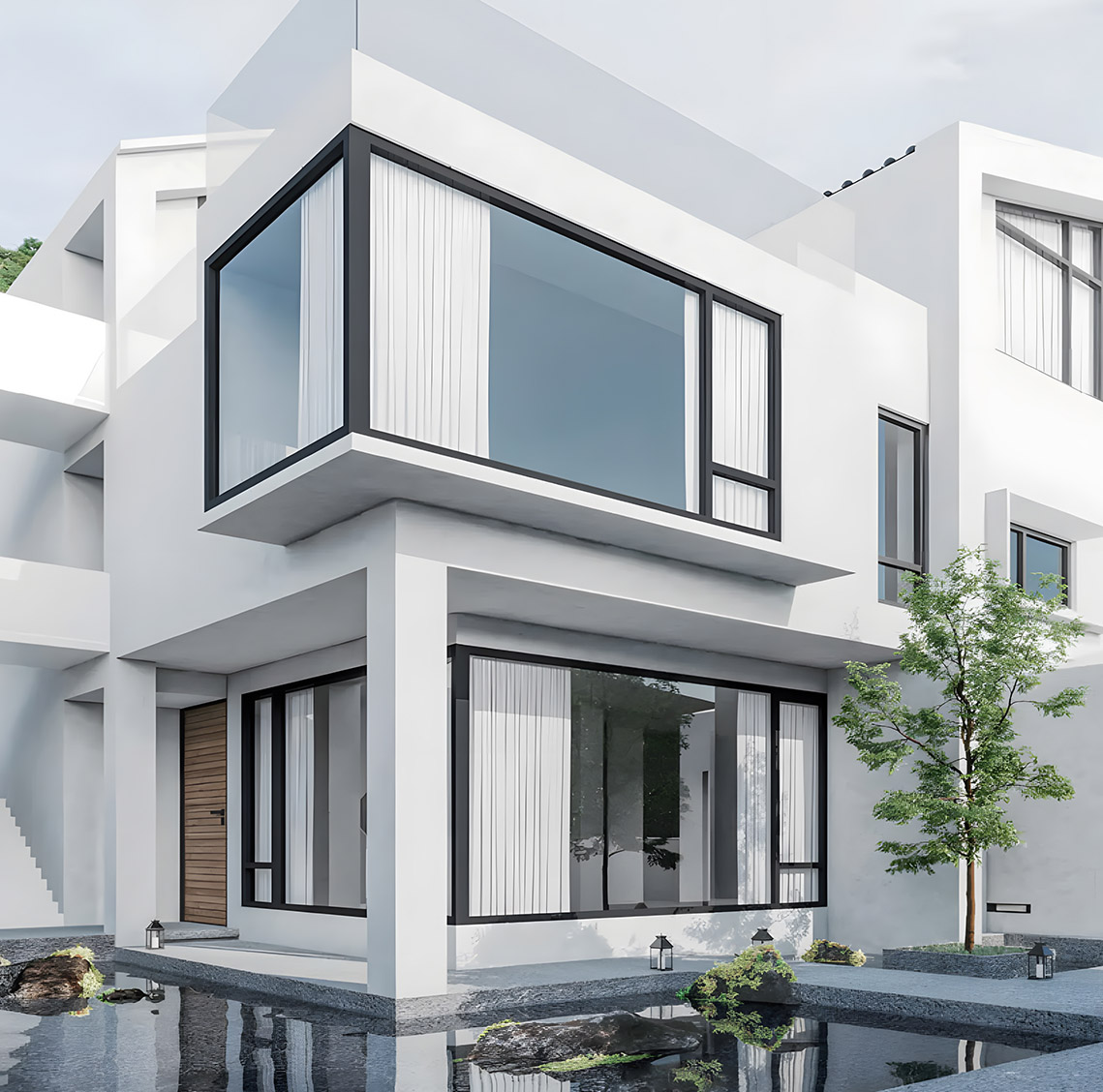
Engineered for modern architectural needs, the GB-75 sliding window combines robust construction with effortless operation. Designed for both residential and commercial applications, this high-per...
Contact State Crown
Custom Solutions for Global Projects
Established in 2005, we specialize in the customization of premium aluminum alloy doors and windows. With over ten years of industry experience, we are committed to the product philosophy of "Safety, Practicality, and Advanced Technology".
- ISO9001 Quality Management System
- EU CE certification
- IPMS (Intellectual Property Management System)
- Australian, American, and Canadian standards
We are located in Foshan, Guangdong, just under one hour's drive from Guangzhou Baiyun International Airport, in the heart of the Pearl River Delta Economic Zone.
If you are interested in any of our products, or would like to discuss a custom order, please feel free to contact us. We look forward to building long-term business relationships with clients around the world.